
Temi Kings
The 20th Asian Games in Aichi-Nagoya have arrived at their competitive crescendo, transforming central Japan into a battleground of athletic brilliance, strategic precision, and raw human emotion. With nearly 470 medal events spanning state-of-the-art venues from Nagoya to Tokyo, the quadrennial gathering has reinforced Asia’s rapidly expanding footprint on the global sporting landscape.
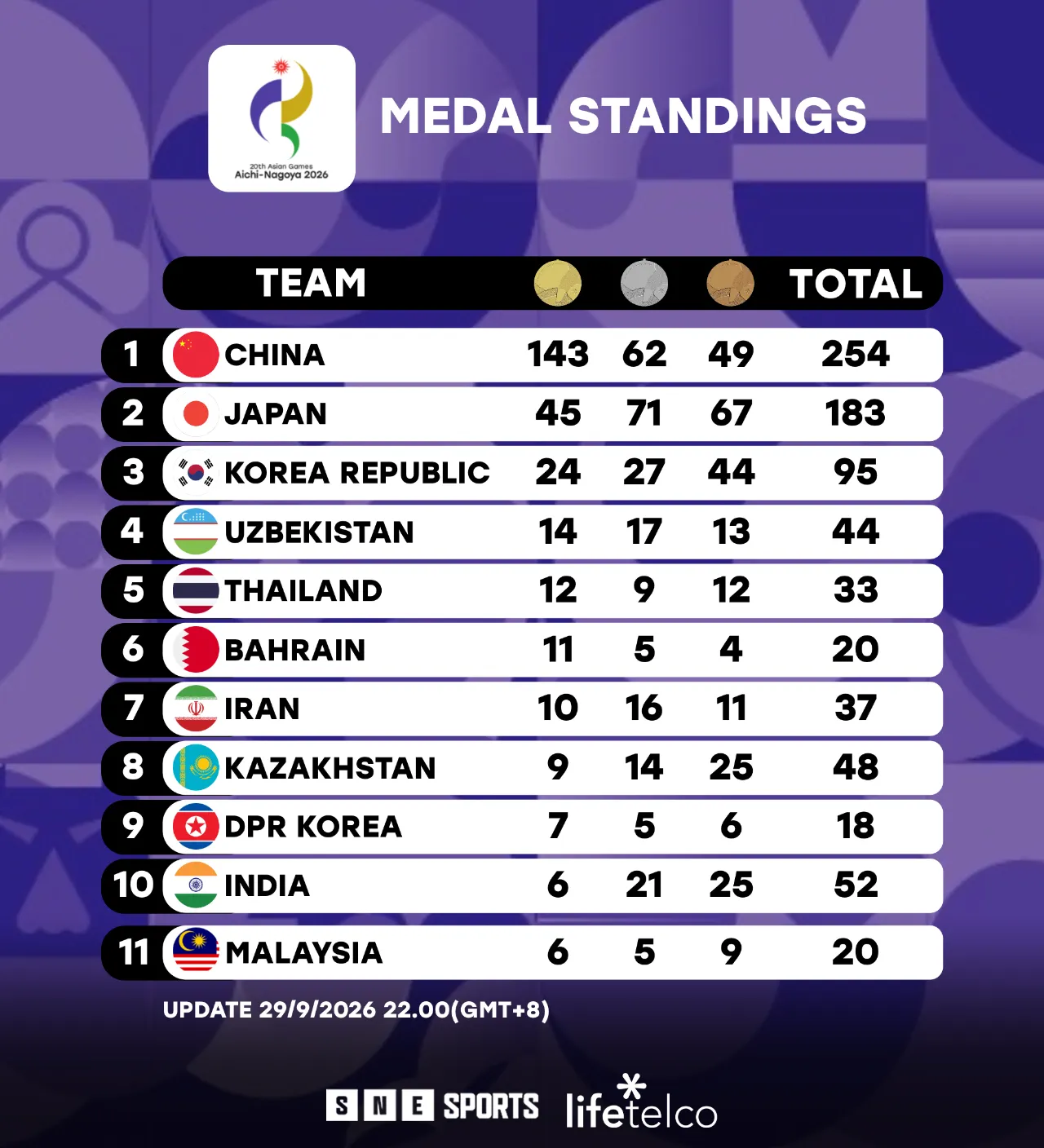
At the top of the standings, the People's Republic of China continues to demonstrate total continental supremacy, eclipsing the 200-medal threshold powered by clinical sweeps across diving, shooting, and table tennis. Host nation Japan and the Republic of Korea remain locked in an intense duel for the remaining podium places, trading golds across swimming, martial arts, and track cycling before passionate home crowds.
Yet beyond the sheer volume of silverware, the defining story of Aichi-Nagoya 2026 lies in the unscripted drama of track and field.
At the Paloma Mizuho Athletics Stadium, the action reached fever pitch during an electrifying evening of relay racing. The Indian women’s 4x400m relay team produced a tactical masterpiece, as the quartet of Kiran, Machettira Poovamma, Prachi, and Vithya Ramraj clocked a blazing 3:29.69 to storm to gold. Delivering seamless baton exchanges under intense pressure, they held off late charges from host nation Japan and China to secure the ultimate prize.
The track drama deepened in the men's middle and long-distance events. Japan’s Ko Ochiai sent the local fans into raptures by smashing the Asian Games record in the men’s 800m final with a stunning time of 1:44.40. Meanwhile, distance runner Gulveer Singh etched his name into local sporting lore by claiming bronze in the men’s 5000m, adding to his earlier 1500m and 10,000m